
Design Confidential: Ep. 9
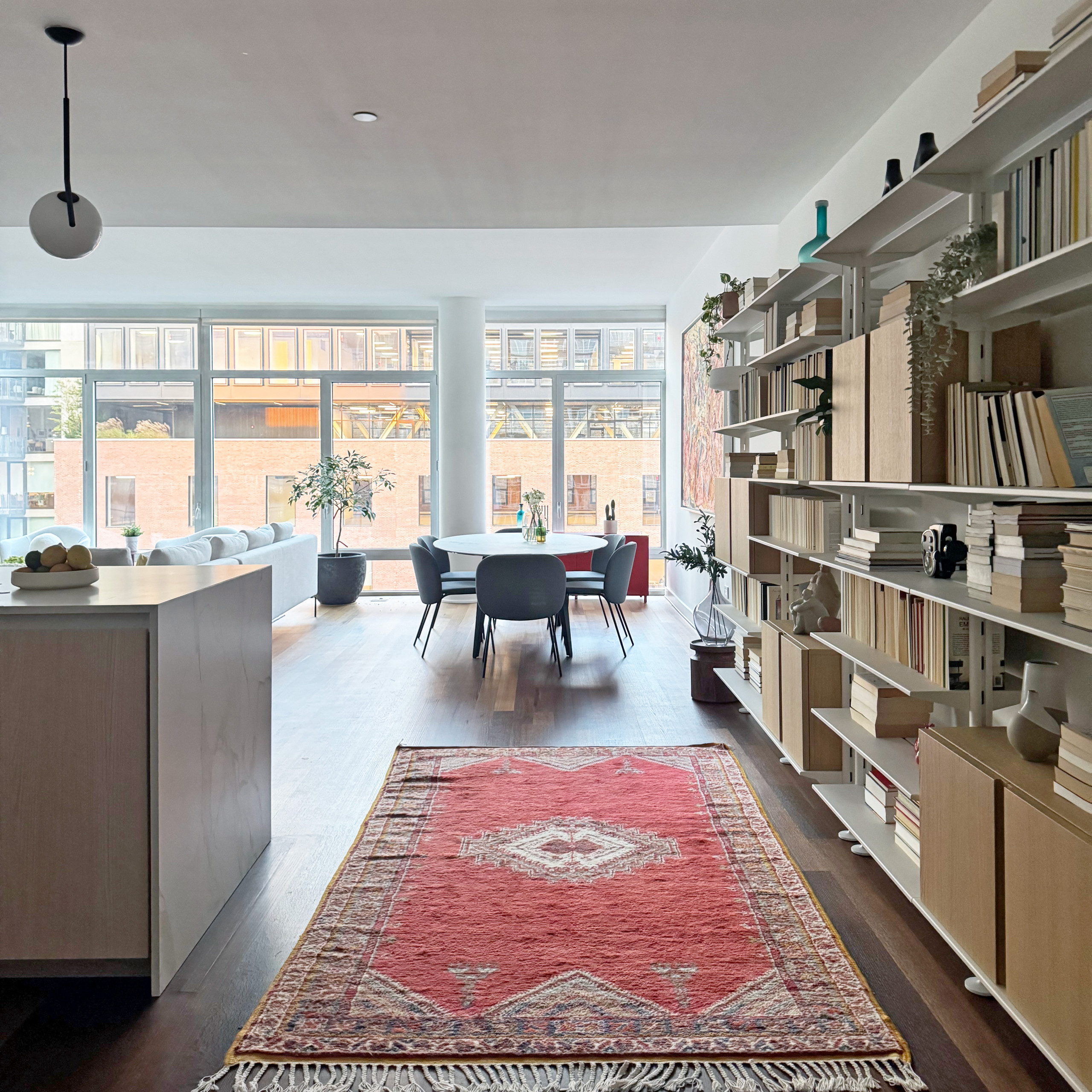
The No-BS Guide to Choosing the Right Rug
Rugs look innocent. Just a piece of fabric for your floor, right? Wrong.
In small New York apartments and homes, the right rug can make a space feel intentional, layered and finished. The wrong one can make even great furniture look... confused. Let’s fix that.
This is a simple, straightforward rug guide for NYC homeowners, renovators and anyone navigating real-life interiors (small spaces included).
- Step One (and the Most Important): Rug Size
This is where most people go wrong. Yes, bigger is usually better. No, this is not a sales tactic. Choosing a rug that’s too small is the fastest way to make a room feel unfinished, especially in New York apartments, where proportions matter even more.
- Living Room
Your rug should anchor the seating area.
. Best look: All furniture legs on the rug (usually 8’×10’ or 9’×12’).
. Good compromise: Front legs on, back legs off, still cohesive, often more budget-friendly.
. Proceed with caution: A smaller rug floating in the center. This works if it’s intentional (vintage, irregular designed shapes and layered rugs).
. Rule of thumb: The rug should extend 8–12 inches beyond the sofa on each side.
- Dining Room
This one is non-negotiable. Add 24–30 inches beyond the table on all sides so chairs stay on the rug when pulled out.
. Choose low-pile or flat weave rugs.
. High pile + dining chairs = daily frustration.
- Bedroom
Cold floors in the morning are not the vibe.
. One large rug under the bed, extending 18–24 inches on the sides and foot
. Or runners on each side for tighter NYC bedrooms
. What doesn’t work: a tiny rug at the foot of the bed. It looks accidental.
- Entryways & Hallways
. Entry rugs should be wider than the door, leaving 4–6 inches of floor visible on each side
. Hallway runners should also leave 4–6 inches of breathing room
. These are high-traffic renovation zones, durability matters here.
- Step Two: Be Honest Before Choosing
Before falling in love with a rug, ask yourself: Kids? Pets? High traffic? Is this an entryway, kitchen or hallway? Do spills make you anxious?
Are you the type to vacuum regularly and tackle spills immediately? How gentle are you with your belongings, especially delicate rugs?
Be real, the prettiest rug in the world is useless if you’re afraid to walk on it. Once you’re honest about how you live, choosing the right material becomes much easier.
- Step Three: Rug Materials
- Wool (The Overachiever)
Naturally durable and resilient, wool fibers bounce back instead of flattening, making wool rugs ideal for high-use spaces. Wool also regulates humidity (discouraging mold and mildew), resists dust mites, traps airborne allergens until vacuumed, and can absorb odors and pollutants, helping improve indoor air quality. Thanks to lanolin, it’s naturally stain-resistant and more forgiving with spills than most people expect, and it doesn’t off-gas chemicals, great for homes with kids, pets or sensitivities. While it costs more upfront, a quality wool rug ages beautifully and often outlasts several cheaper rugs combined.
Best for: living rooms, bedrooms, dining rooms, staircases.
- Silk (The Diva)
Beautiful, luminous, and incredibly soft, with a sheen no other fiber can replicate. Silk rugs are statement pieces, but they’re fragile, stain easily and show wear quickly.
Best for: low-traffic, formal spaces only. Not recommended for households with pets (so… most of New York City) and kids.
- Natural Fibers (Jute, Sisal, Seagrass)
Textural, relaxed, and great for layering in modern interiors. They don’t love moisture and can feel rough underfoot.
Best for: casual living spaces, dining rooms, layering under decorative rugs.
- Synthetic Fibers (Polypropylene, Polyester)
Budget-friendly, stain-resistant, and easy to clean. Less luxurious, but practical.
Best for: kids’ rooms, high-traffic areas, outdoor spaces.
- Cotton
Soft, lightweight, and often washable, but not built for heavy wear.
Best for: bathrooms, kitchens, low-traffic spaces.
- Blends (Wool + Silk)
A smart middle ground, visual interest without the full maintenance of silk.
Best for: clients who want texture, sheen and softness with more forgiveness.
- Step Four: Color & Pattern
. Go bold if the room is mostly neutral, pattern hides wear and adds personality
. Go calm if the room already has a lot going on
. Your rug should contrast with your floor. If it blends in, it’s not working
. Designer trick: Pull one color from your artwork, pillows or curtains and echo it in the rug.
- Step Five: Rug Placement
. Center the rug on the furniture grouping, not the room
. Leave 12–18 inches of floor visible around the perimeter when possible
. Align with architectural elements if it works with the layout
. And yes, always use a rug pad. It’s not optional. It keeps everything in place and helps your rug (and floors) last longer.
- One Last Pro Tip (Designers Swear by This)
Before buying, tape out the rug size on the floor with painter’s tape. It takes 10 minutes and saves you from a very expensive mistake, especially during renovations.
The Bottom Line
Choosing the right rug isn’t complicated, but it does require intention. Measure properly. Size up when in doubt. Choose materials that fit your life, and please don’t go too small.
A well-chosen rug anchors a room, adds warmth and quietly does a lot of heavy lifting in any space, even the most luxurious New York apartment or renovation project.
And if you’re still unsure… that’s what designers are for (Yes, hi! That’s us.) Have questions about rugs, renovations or your interior space? Email us anytime, we’re happy to help start the conversation.
Every space has a story. We’d love to help design yours.